Danh mục

Why Choose a Cast Resin Busbar Trunking System for High Humidity Environments?

Solid epoxy encapsulation makes a cast resin busbar trunking system for high humidity environments the safest choice—blocking moisture, preventing short circuits, and ensuring reliable power distribution.
May 23rd,2026 3 Lượt xem

You should choose a cast resin busbar trunking system for high humidity environments because its solid epoxy encapsulation completely blocks moisture ingress, preventing catastrophic short circuits and corrosion. This advanced design ensures continuous, safe power distribution even in the most severe industrial and maritime conditions.

Designing an electrical distribution network for environments plagued by constant moisture requires moving beyond standard commercial equipment. Facilities such as underground mining operations, coastal maritime ports, chemical processing plants, and municipal water treatment facilities face a relentless enemy in the form of airborne water vapor. When standard electrical conduits and traditional metal-enclosed busbars are deployed in these settings, they inherently introduce vulnerabilities that compromise the entire power infrastructure. The ambient humidity inevitably finds its way into the smallest crevices, initiating a slow but unstoppable chain reaction of material degradation, copper oxidation, and eventual insulation failure.

To combat this, engineers must select a technology fundamentally designed to operate underwater or in saturated atmospheres without degradation. The cast resin busbar trunking system for high humidity environments represents the pinnacle of this specialized engineering. By abandoning traditional air-insulated designs in favor of a monolithic, void-free structure, this technology redefines reliability in harsh conditions. Throughout this comprehensive technical overview, we will explore the exact mechanisms of moisture-induced electrical failures, the material science behind epoxy encapsulation, and the rigorous installation protocols required to maintain an absolute waterproof seal across massive industrial power networks.

Why Are We Sharing This Expertise?

We are sharing this expertise because ZHERUTONG is a leading manufacturer of premium busbar trunking, and we want to help engineers make safer electrical design choices. Our factory-direct experience reveals exactly what works in harsh conditions.

As a dedicated manufacturer of advanced electrical distribution systems, ZHERUTONG has spent vast amounts of time observing how different materials and engineering designs perform in the real world. We routinely interact with frustrated facility managers, electrical contractors, and lead engineers who are exhausted by the endless cycle of replacing corroded equipment. Through these direct interactions and our extensive manufacturing observation, we have seen firsthand the devastating consequences of deploying inadequate power distribution systems in wet and corrosive atmospheres.

We are not just observing these failures from afar; we engineer the solutions on our factory floor. Our production lines are dedicated to creating heavy-duty cast resin busbar trunking that can withstand environments where standard equipment fails within months. By sharing this deep, manufacturer-level knowledge, we aim to bridge the gap between theoretical electrical design and practical, long-term operational survival. We want to empower procurement officers and project planners to look beyond initial capital expenditure and understand the total lifecycle value of utilizing specialized resin systems. When you understand the physics of why traditional systems fail and exactly how our manufacturing processes eliminate those weaknesses, you can specify equipment that guarantees the safety of your personnel and the uninterrupted productivity of your facility.

How Does Moisture Destroy Traditional Busbars?

Moisture destroys traditional busbars by penetrating tiny air gaps in the casing, leading to rapid copper oxidation and severe insulation degradation. Over time, this condensation creates conductive paths that inevitably trigger dangerous electrical faults.

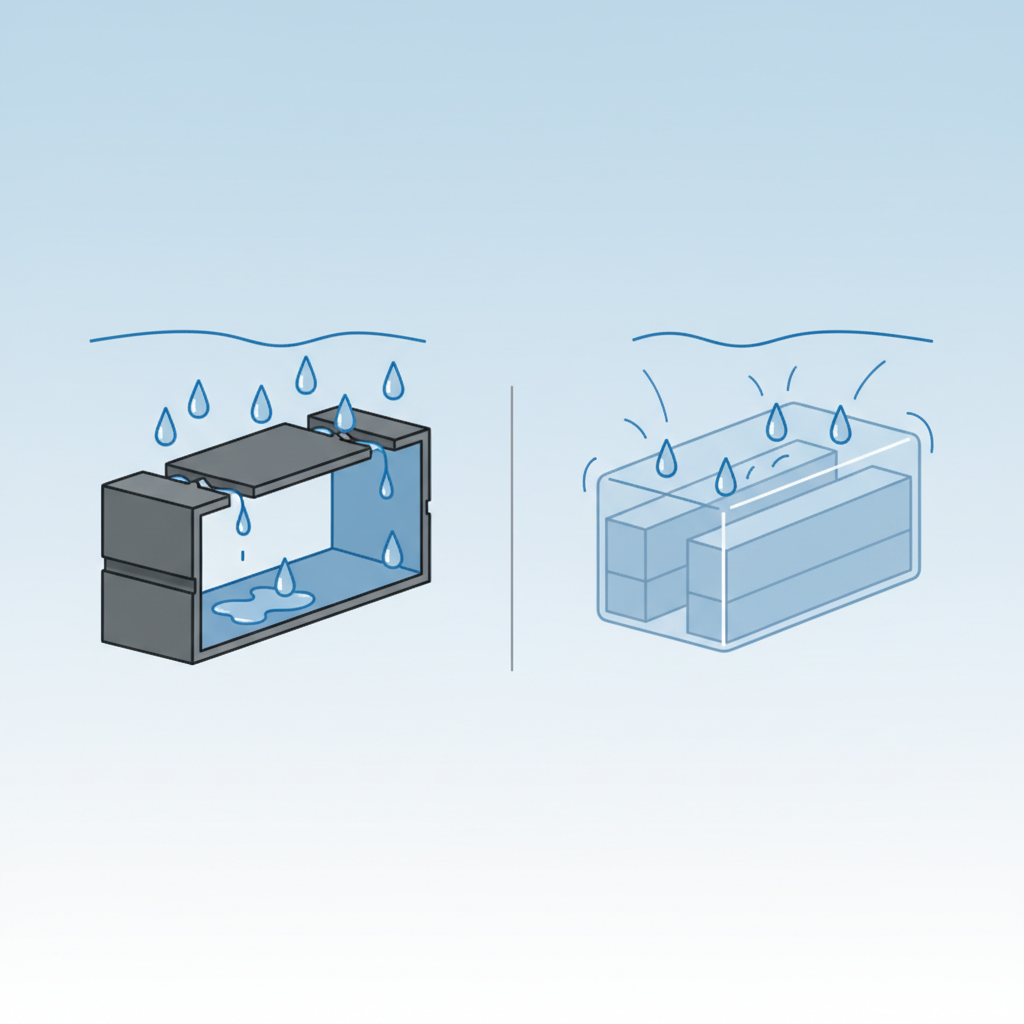
To appreciate the necessity of specialized systems, one must first understand the mechanical and thermal realities of traditional sheet-metal enclosed busbars. Standard busbars rely on an external metal housing to protect the internal copper or aluminum conductors. Between the housing and the conductors, there is a volume of air. In high-humidity zones, this internal air becomes a massive liability. As industrial facilities experience natural temperature fluctuations between day and night, or as the busbar itself heats up under heavy electrical load and cools down during off-peak hours, the air inside the casing undergoes thermal cycling.

When the temperature drops below the dew point, the humid air trapped inside the casing can no longer hold its moisture. This results in condensation forming directly on the internal metal surfaces, the insulating supports, and the conductors themselves. Standard enclosures, even those with relatively high ingress protection ratings, are rarely airtight. They breathe. As they breathe, they continuously draw in fresh, moisture-laden air, fueling a continuous cycle of internal condensation. This trapped water reacts with the copper or aluminum, forming resistive oxide layers that generate excess heat, further stressing the system and creating a compounding cycle of thermal and moisture-based deterioration.

What Causes Insulation Breakdown Inside?

Insulation breakdown occurs inside because airborne water molecules settle on electrical phases, slowly eating away at standard protective wraps. This chemical degradation lowers the dielectric strength until an arc flash becomes unavoidable.

In standard systems, conductors are typically wrapped in materials like Mylar, PVC, or standard epoxy powder coatings. While these materials offer excellent dielectric strength in dry, climate-controlled environments, they are highly susceptible to long-term moisture exposure. Continuous contact with condensation causes microscopic swelling and chemical breakdown of the polymer chains in these insulating wraps.

As the polymer degrades, micro-cracks begin to form across the surface of the insulation. These cracks act as microscopic reservoirs, trapping even more water and atmospheric pollutants. Water is a polar molecule, and when it permeates the weakened insulation, it drastically alters the electric field distribution around the live conductors. The dielectric strength—the maximum electric field the material can withstand before breaking down—plummets. What was once a robust barrier becomes a compromised, leaky membrane that allows electrical stress to concentrate at specific weak points, setting the stage for an inevitable and catastrophic failure.

Why Do Short Circuits Happen Fast?

Short circuits happen fast in damp areas because water mixed with industrial dust forms a highly conductive sludge across the busbar phases. Once this sludge bridges the gap between live conductors, an immediate electrical failure is triggered.

The presence of pure water is problematic, but in industrial or maritime environments, humidity is rarely pure. The air is heavily laden with conductive dust, salt spray, chemical aerosols, or metallic particles. When condensation forms inside a traditional busbar, it mixes with these pollutants to create a highly conductive electrolytic sludge.

This sludge drastically reduces the creepage distance, which is the shortest path along the surface of an insulating material between two conductive parts. As the conductive sludge spreads across the insulating supports and phase separators, a phenomenon known as electrical tracking occurs. Tiny, localized leakage currents begin to flow across the surface of the wet insulation, carbonizing the material and creating a permanent conductive path. Once this carbonized track fully bridges the gap between two phases or between a phase and the grounded metal casing, a massive short circuit happens in a fraction of a second, often resulting in an explosive arc flash that destroys the equipment and halts facility operations.

Why Does Cast Resin Prevent Moisture?

Cast resin prevents moisture by utilizing a vacuum-poured epoxy mixture that surrounds the copper conductors with zero air voids, forming an impenetrable solid block. This monolithic structure physically leaves no space for water vapor to enter or condense.

The fundamental engineering philosophy behind a cast resin busbar trunking system for high humidity environments is the complete elimination of internal air. If there is no air, there can be no condensation. At ZHERUTONG, our manufacturing process achieves this by utilizing an advanced vacuum casting technique. The copper or aluminum conductors are meticulously arranged in their exact phase configurations inside a heavy-duty mold. Once aligned, a specially formulated, highly viscous epoxy resin mixture is poured into the mold under strict vacuum conditions.

The vacuum environment is critical because it forcefully extracts any microscopic air bubbles from the resin before it cures. As the resin flows around the conductors, it fills every available micrometer of space, bonding directly to the molecular surface of the metal. Following the pour, the assembly undergoes an exothermic curing process, where the liquid resin hardens into a dense, rock-solid monolithic block. The resulting cast resin busbar trunking is essentially a single, unified object. Because the conductors are permanently encased in solid stone-like epoxy, there are absolutely no internal cavities where ambient air can circulate, completely neutralizing the threat of internal condensation regardless of external temperature swings.

How Does the Epoxy Block Water?

The epoxy blocks water by acting as a seamless, non-porous barrier that repels liquid and vapor at a molecular level. Its chemical composition ensures long-term stability without cracking or absorbing moisture over decades of use.

The specific epoxy formulations used in premium cast resin systems are engineered for extreme chemical and environmental resistance. Unlike standard plastics or rubber that can become porous or brittle over time, the cross-linked polymer structure of the cured resin is entirely non-porous. It boasts an exceptionally low water absorption rate, meaning that even if the busbar is completely submerged in water, the liquid cannot penetrate the outer surface to reach the live conductors inside.

Furthermore, the thermal expansion coefficient of our proprietary resin mixture is carefully calibrated to match that of the internal copper or aluminum conductors. This is a crucial manufacturing detail. If the resin and the metal expanded and contracted at different rates during electrical load cycling, microscopic gaps could form at the boundary layer between the two materials, eventually allowing moisture to seep in. By matching the thermal expansion rates, the resin remains tightly bonded to the conductors, maintaining a perfect, watertight seal through decades of continuous, heavy-load operation.

Are Air Gap Systems Less Effective?

Air gap systems are less effective because they rely on external metal casings and rubber gaskets that degrade, eventually letting humid air circulate around the live conductors. In contrast, solid resin systems eliminate the internal air entirely.

When comparing a cast resin busbar trunking system for high humidity environments against traditional air-insulated models, the long-term reliability gap becomes obvious. Air gap systems attempt to achieve high IP ratings by utilizing complex arrangements of rubber gaskets, silicone sealants, and tightly bolted metal joints. While these seals may perform adequately during initial factory testing, they are highly vulnerable to environmental degradation.

Constant exposure to ultraviolet light, industrial ozone, chemical vapors, and extreme thermal cycling causes rubber gaskets to lose their elasticity. They dry out, shrink, and crack. Metal casings are susceptible to rust and physical deformation from impact or vibration. Once a single gasket fails or a metal seam warps, the integrity of the entire air gap system is compromised, allowing humid air to flood the internal chamber. Solid resin systems bypass this failure mode entirely. They do not rely on perishable external gaskets to protect the conductors; the structural body of the busbar itself is the primary and impenetrable defense against the environment.

How to Implement the Installation Guide?

You implement the installation guide by following strict alignment protocols, applying specialized waterproof joint compounds, and torqueing connections to factory specifications before sealing. Mastering the cast resin busbar trunking IP68 rating installation guide ensures the entire run remains completely waterproof.

Manufacturing a flawless cast resin busbar trunking system is only half the battle; the other half is ensuring that the system is installed correctly on the job site. The most vulnerable points in any electrical distribution network are the joints where individual sections connect. If these junctions are not sealed with the same rigor as the main bodies, the entire system's moisture resistance is compromised. Therefore, executing a flawless installation is non-negotiable for facilities operating in extreme humidity.

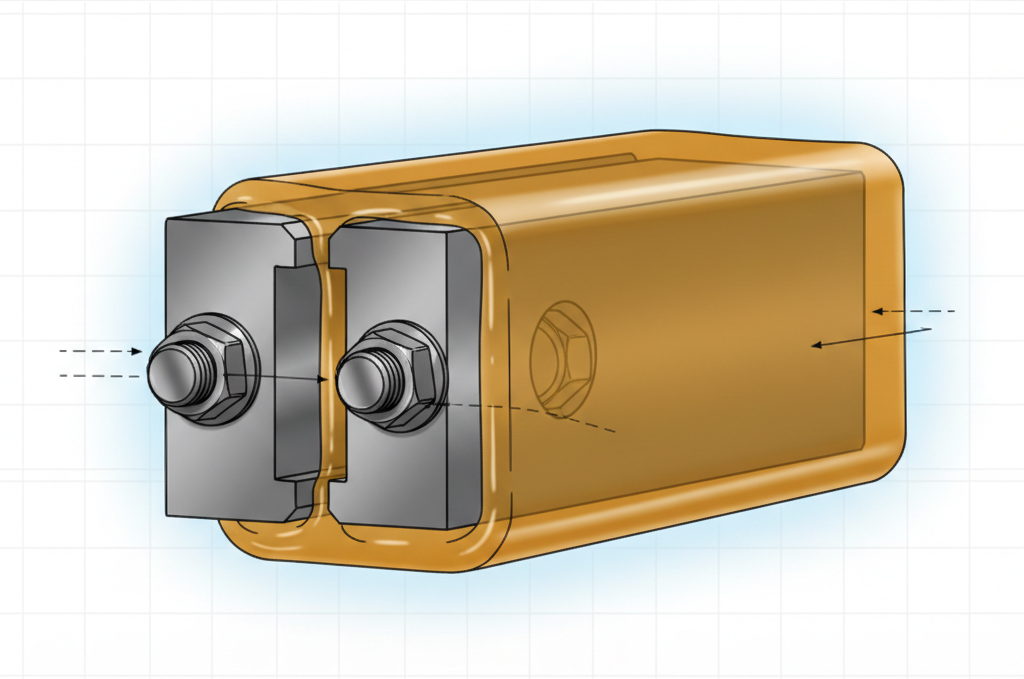
The process begins with meticulous physical alignment. Due to the rigid nature of solid cast blocks, the supporting brackets and hangers must be leveled with absolute precision to prevent mechanical stress on the joints. Once the sections are perfectly aligned, the electrical connection is made using specialized double-headed shear bolts or calibrated torque wrenches to ensure optimal contact pressure between the phase conductors. To achieve this flawless seal, contractors must strictly adhere to the cast resin busbar trunking IP68 rating installation guide provided with our systems. Any deviation from these factory-mandated torque values or alignment procedures can introduce micro-stresses that may eventually compromise the waterproof integrity of the joint.

What Are the Joint Sealing Steps?

The joint sealing steps involve bolting the connection, applying the custom resin mix over the joint block, and allowing it to cure into a unified solid piece. This process ensures the joints are just as moisture-resistant as the main body.

Once the mechanical and electrical connections are secured and verified, the critical phase of sealing the joint begins. This is where the true waterproof nature of the system is finalized. A custom-designed mold or joint block is securely fastened around the connection point, creating a temporary containment vessel.

The installation team then mixes a specialized, two-part liquid epoxy resin on-site. This resin is formulated to have the exact same chemical and dielectric properties as the resin used in the factory casting process. The liquid resin is carefully poured into the joint mold, flowing around the bolted connections and filling every microscopic void. As it undergoes its chemical curing process, it bonds seamlessly with the exposed resin ends of the adjacent busbar sections. Once fully cured, the mold is either removed or left in place as an external shell, leaving behind a continuous, unbroken run of solid resin that is completely impervious to water ingress from end to end.

How to Verify the IP68 Rating?

You verify the IP68 rating by conducting thorough insulation resistance testing with a megohmmeter before and after the final resin pour. This electrical test confirms that absolutely no moisture pathways exist within the newly sealed system.

Quality control during installation is paramount. Before the system is energized, the installation team must empirically prove that the joint sealing process was successful and that the IP68 rating has been maintained across the entire network. This is achieved through rigorous electrical testing, specifically using a high-voltage megohmmeter to measure insulation resistance.

Testing must be conducted in stages, exactly as outlined in the cast resin busbar trunking IP68 rating installation guide. An initial baseline test is performed after the sections are bolted but before the resin is poured, ensuring the mechanical connection is sound and free of debris. After the joint resin has fully cured, a final, high-voltage insulation resistance test is conducted across all phases and to the ground. If the megger readings show exceptionally high resistance values that hold steady under voltage stress, it scientifically confirms that the resin has formed a perfect, void-free seal. This verification process provides facility managers with absolute confidence that their new power distribution system is ready to endure the harshest, wettest conditions imaginable.

How Did We Solve Client Problems?

We solved client problems by custom-manufacturing a heavy-duty cast resin system that replaced their failing traditional busbars in a highly corrosive, wet environment. By partnering with ZHERUTONG, the client eliminated their frequent power outages and drastically reduced maintenance costs.

Theoretical engineering principles are important, but at ZHERUTONG, we measure our success by our ability to solve real-world crises for our clients. We frequently receive urgent requests from facilities that are on the brink of operational collapse due to the failure of standard electrical equipment. One such scenario perfectly illustrates the transformative power of upgrading to a purpose-built cast resin busbar trunking system for high humidity environments.

We were contacted by an engineering firm managing a massive infrastructure project, seeking an immediate intervention. Their existing power distribution network was deteriorating at an alarming rate, posing severe safety risks to the on-site personnel and threatening to shut down a critical public utility. The standard metal-enclosed busbars they had initially installed were completely mismatched for the environmental realities of the site. They needed a manufacturer who could not only provide a superior product but also engineer a custom layout to fit into their existing, highly confined electrical galleries without requiring a complete facility redesign.

What Was the Southeast Asian Challenge?

The Southeast Asian challenge involved a massive water treatment plant in Indonesia that suffered from constant power failures due to extreme tropical humidity and corrosive chlorine gases. Their standard metal-enclosed busbars were rusting rapidly, causing severe safety hazards.

The client operated a primary municipal water treatment facility located in a coastal region of Indonesia. This specific environment represents a perfect storm of electrical hazards. The ambient relative humidity rarely dropped below ninety-five percent, and the ambient temperatures were consistently high. Furthermore, the busbar runs were located in subterranean galleries near raw water intake pumps and chemical dosing stations, exposing the equipment to continuous condensation mixed with highly corrosive chlorine vapor.

The facility originally utilized 3200A and 4000A aluminum-cased, air-insulated busbars to route power from the main transformers to the heavy-duty pump switchgear. Within months of commissioning, the high humidity breached the degraded rubber gaskets. Condensation formed inside the casings, mixing with the chlorine gas to create hydrochloric acid micro-droplets. This acidic moisture rapidly oxidized the copper conductors and destroyed the Mylar insulation wrapping. The plant began experiencing severe arcing events, leading to unpredictable, cascading power outages. These outages halted water purification processes, forcing the municipality to rely on emergency reservoirs and costing the facility tens of thousands of dollars in emergency maintenance and downtime every single month.

How Did ZHERUTONG Deliver the Solution?

ZHERUTONG delivered the solution by engineering and shipping a fully customized cast resin system tailored exactly to their plant layout. Our direct manufacturer support and superior materials cured their downtime issues permanently.

Upon receiving the urgent consultation request, the engineering team at ZHERUTONG immediately analyzed the facility's architectural schematics and the specific chemical profile of the environment. We determined that only a fully encapsulated, chemically resistant cast resin system could survive the continuous exposure to high humidity and chlorine vapor. We engineered a customized cast resin busbar trunking layout that precisely matched the complex bends, elevation changes, and tight clearances of their subterranean pump galleries, ensuring a drop-in replacement that minimized installation time.

We manufactured the entire 4000A system at our facility, utilizing our proprietary vacuum-poured epoxy designed specifically for extreme chemical resistance. Along with the custom hardware, we provided rigorous direct-from-factory guidance, ensuring the local contractors understood every nuance of the sealing process to guarantee the IP68 rating. Once the ZHERUTONG cast resin system was installed and energized, the results were immediate and permanent. The impenetrable epoxy blocks completely neutralized the threat of the humid, chlorinated atmosphere. Since the commissioning of our system, the Indonesian water treatment plant has experienced zero moisture-related electrical faults, completely eliminating their previous downtime and drastically reducing their ongoing maintenance expenditures.

Why Should You Contact ZHERUTONG Today?

You should contact ZHERUTONG today because partnering directly with a proven manufacturer guarantees you receive the highest quality cast resin systems tailored to your specific environmental challenges. Reach out through our website now to secure reliable power distribution for your next demanding project.

When the safety of your personnel and the continuous operation of your facility are on the line, you cannot afford to compromise on your electrical distribution infrastructure. High humidity, corrosive gases, and extreme industrial environments will inevitably destroy standard equipment, leading to catastrophic failures and massive financial losses. By choosing a specialized cast resin busbar trunking system, you are investing in decades of impenetrable, maintenance-free reliability.

As a dedicated manufacturer, ZHERUTONG possesses the factory-direct expertise, the advanced production capabilities, and the proven track record required to solve your most complex power distribution challenges. We do not just sell equipment; we engineer permanent solutions tailored to your exact operational realities. Do not wait for your current system to fail. We strongly encourage facility managers, procurement officers, and lead engineers to visit the ZHERUTONG website today. Leave your project details and environmental specifications in our contact form, and let our engineering team design a custom, impenetrable power distribution network that will keep your facility running safely, no matter how harsh the conditions.

CONTACT US

If you have any queries, get in touch today! Don't hesitate. We try to take the extra step for our customer satisfaction.
First Name*
Company Name*
Email*
Last Name
Country
Message*
Leave a message
First Name*
Company Name*
Email*
Last Name
Country
Message*