Danh mục

Why Your Data Center Needs a Specialized Busbar Trunking System Supplier

Not all power distribution suppliers are equal. Learn why choosing the right busbar trunking system supplier for data center power distribution is a critical engineering decision.
Jun 23rd,2026 12 Lượt xem

A data center engineer specifying power distribution infrastructure is not solving the same problem as a factory floor project manager. The stakes are fundamentally asymmetric. A cable tray failure in a warehouse causes downtime that gets logged and fixed. A power distribution failure in a Tier III colocation facility cascades into SLA breaches, hardware damage, tenant liability claims, and reputational loss measured in seven figures — sometimes before the root cause is even identified.

Most content online about busbar trunking system suppliers treats all applications as interchangeable. We don't. At ZHERUTONG, we've worked with enough data center projects — from transformer room riser runs to overhead busway in white space to in-row rack-level distribution — to know that the supplier selection criteria for this environment are genuinely different from general industrial procurement. The engineering decisions that come up during a data center busbar project are specific, the tolerance for ambiguity is near zero, and most generic supplier lists don't reflect that gap.

This article is written for electrical engineers, facility managers, and procurement teams who are past the "what is a busbar" stage and need to make a real sourcing decision under real project constraints.

What Makes Data Center Power Distribution So Different from Industrial Use?

Data centers don't just demand higher current capacity — they require power distribution systems engineered around redundancy, continuous thermal management, and the ability to reconfigure live circuits without scheduled downtime, none of which are standard priorities in conventional industrial busbar specifications.

A factory busbar run is typically designed around a fixed load, a predictable maintenance window, and a single feed path. If the system goes offline for four hours on a Saturday, the production schedule absorbs it. That logic does not exist in a data center. The operational assumptions are entirely different, and they propagate all the way down into how a busbar trunking system must be specified, manufactured, and installed.

Why Does Redundancy Architecture Change Everything?

In a 2N or N+1 redundancy topology, the busbar trunking system must support parallel feed paths with zero single points of failure, which means joint design, tap-off box placement, and enclosure integrity all require a different engineering standard than single-feed industrial runs.

In a 2N architecture, every load has two completely independent power paths, each capable of carrying the full load independently. In an N+1 configuration, there is one additional capacity unit beyond what the load requires, providing fault tolerance without full duplication. Both topologies translate into physical busbar layout requirements that a supplier must understand before the first drawing is produced.

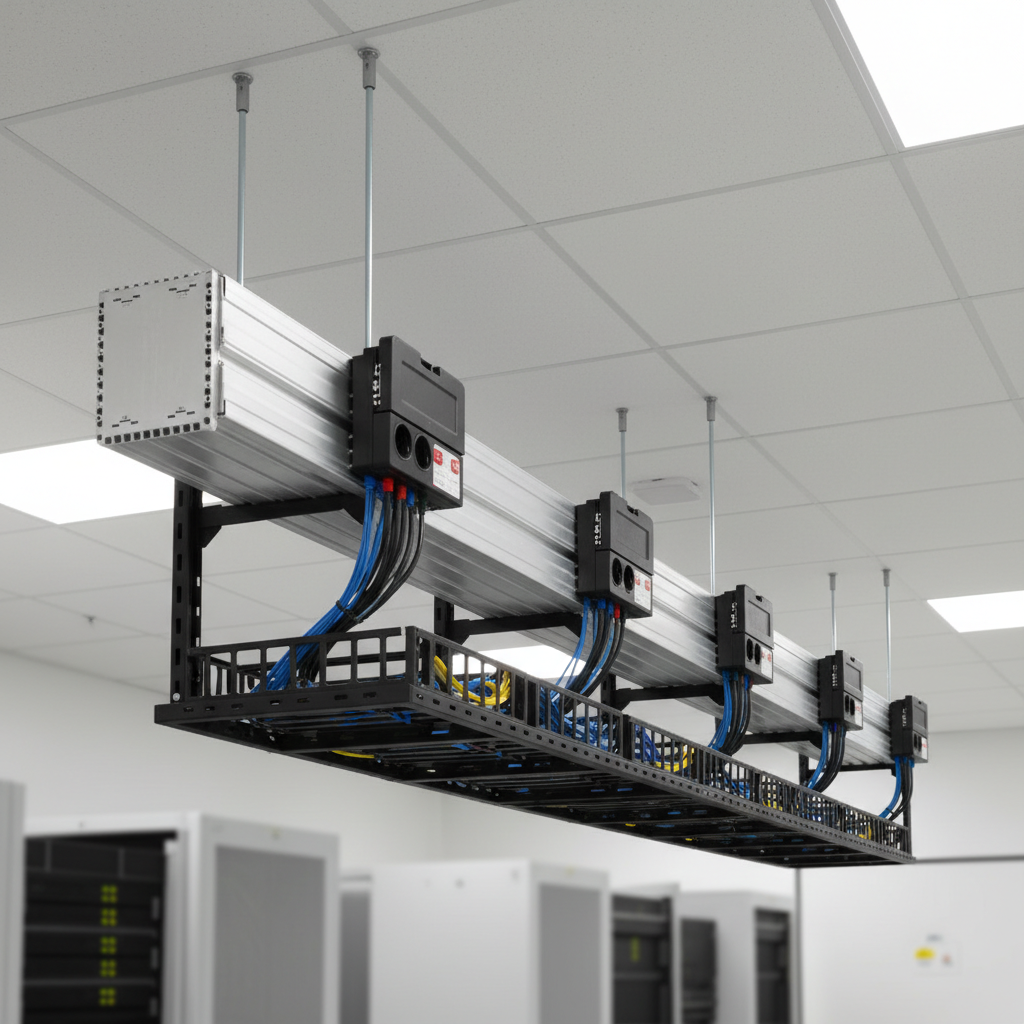
Feeder busbar and distribution busbar serve distinct roles within the same data center. The feeder run from the transformer to the main distribution board carries the full facility load and must be rated accordingly — typically in the 2000A to 5000A range for hyperscale or large colocation environments. The distribution busbar running overhead in the white space, feeding individual rack rows, operates at lower current ratings but must support live tap-off access during normal operations, because maintenance windows in production data centers are either extremely short or nonexistent.

Tap-off box accessibility under energized conditions is not a convenience feature in this context — it is a core engineering requirement. Any busbar trunking system supplier who cannot demonstrate that their tap-off boxes are designed for safe live insertion and removal has disqualified themselves from serious data center procurement consideration.

How Does Thermal Density Affect Busbar Selection?

Modern high-density server racks generating 20–40 kW per rack create localized heat concentrations that demand busbar systems with verified thermal performance ratings, not just nominal ampacity figures.

The distinction between a nominal current rating and a verified thermal performance rating matters enormously in an enclosed data hall environment. IEC 61439-6 governs busbar trunking systems and requires that temperature rise testing be conducted under controlled conditions, with conductor surface temperatures capped at 70K above ambient. But the ambient conditions in a high-density data center aisle — particularly in hot-aisle containment configurations — can be significantly higher than the 35°C ambient typically assumed in standard testing. This means a system rated at 2000A under lab conditions may need to be derated in practice, and a supplier who cannot provide the underlying thermal test data cannot help you make that calculation accurately.

Sandwich-type busbar construction, where conductors are tightly laminated with insulation between them, offers better thermal performance in enclosed environments compared to air-insulated designs because the heat path is more controlled and the overall cross-section is more compact. In data center white space where ceiling clearances are tight and airflow management is critical, the profile difference between a sandwich busbar and an air-insulated equivalent is also a practical installation consideration.

At ZHERUTONG, we treat thermal performance validation as a non-negotiable deliverable for data center orders. When a project specifies overhead busway for a high-density row, we provide the thermal test data alongside the product datasheet — not as an afterthought, but as part of the standard technical submission package.

What Technical Specifications Should a Data Center Engineer Demand from Any Busbar Trunking System Supplier?

Before issuing an RFQ, a data center engineer should have non-negotiable specification requirements across four dimensions: conductor material and joint resistance, enclosure protection rating, certification traceability, and modular expansion compatibility — and any supplier unable to provide documented evidence on all four should be disqualified early.

Knowing how to choose a busbar trunking system manufacturer for industrial projects is a useful starting point, but data center procurement demands a more granular checklist. The following table captures the core specification parameters, what to ask any supplier, and why each matters.

Specification Parameter

What to Ask the Supplier

Why It Matters

Conductor material

Copper or aluminum grade documentation

Affects conductivity, weight, and long-term joint oxidation behavior

Joint design

Tested joint resistance values and torque specs

Joints are the weakest point under thermal cycling

IP rating

IP rating test certificate for the specific enclosure

Data center environments require consistent protection against dust and condensation

Certification type

Full type test under accredited third-party lab

Routine test or internal test does not prove the same level of compliance

Thermal test data

Temperature rise test results at rated current

Required to verify real-world derating under data center ambient conditions

Expansion compatibility

Dimensional tolerance documentation across production batches

Ensures sections added later will mate with the original installation

Lead time documentation

Production schedule commitment in writing

Phased data center construction requires reliable delivery sequencing

Why Does Conductor Joint Design Matter More Than Raw Material?

The weakest point in any busbar trunking run is the joint — and a supplier who cannot provide tested joint resistance values and torque specifications is offering you a system whose real-world performance is unknown under thermal cycling conditions.

Copper conductors offer higher conductivity than aluminum and are generally preferred for data center feeder runs where minimizing voltage drop and heat generation is a priority. Aluminum becomes relevant where weight constraints are significant — for example, in overhead distribution busway where structural loading on the ceiling grid is a concern. The trade-off is real, and the right answer depends on the specific run length, current rating, and installation geometry.

What matters more than the raw material choice, however, is the joint surface treatment. Silver-plated contact surfaces at busbar joints maintain low contact resistance over thousands of thermal cycles — the kind of repeated expansion and contraction that occurs in a facility running 24 hours a day at varying load levels. At ZHERUTONG, joint resistance values are documented in factory test reports for each production batch, giving procurement teams a traceable record rather than a specification claim.

Which Certifications Are Actually Traceable for Data Center Projects?

IEC 61439-6 full type test certification is the baseline, but for data center projects — especially those with international insurance or Uptime Institute compliance requirements — certification traceability to an accredited third-party laboratory, not just a manufacturer's internal test, is what procurement teams should be verifying.

IEC 61439-6 defines three test levels: full type test, routine test, and sample test. A full type test, conducted by an accredited external laboratory, validates the complete system design against all applicable performance parameters including temperature rise, short-circuit withstand, and dielectric withstand. A routine test covers individual units coming off the production line but does not validate the system design. A sample test falls somewhere between the two. When a supplier says "IEC compliant," that phrase covers all three levels — and only the full type test, traceable to an accredited lab, provides the design validation that data center insurance underwriters and Uptime Institute auditors expect to see.

Depending on project geography, CE marking for European markets and UL listing for North American projects may also be required. ZHERUTONG holds certifications covering multiple markets and can provide the underlying documentation — not just the certificate number — for verification during procurement due diligence.

Is Modular Expansion Compatibility a Supplier Capability or a Product Feature?

Modular expansion in a live data center environment is as much a supplier capability as it is a product feature — the manufacturer needs to guarantee dimensional consistency across production runs so that sections added 18 months later physically and electrically mate with the original installation.

Proprietary joint systems create long-term supplier dependency. That dependency is manageable if the supplier can guarantee consistent dimensional tolerances across production batches over a multi-year project lifecycle. It becomes a serious risk if the supplier cannot provide that documentation or if their manufacturing process does not control tolerances tightly enough to ensure interchangeability.

ZHERUTONG provides dimensional tolerance documentation as part of the project delivery package, specifically to support future expansion planning. Plug-in tap-off box positions and current ratings are specified against the actual layout drawing from day one, so that when a data center operator adds rack density in row three of building two eighteen months after initial commissioning, the expansion sections integrate without modification.

How Do You Evaluate a Busbar Trunking System Manufacturer Beyond the Product Datasheet?

A datasheet tells you what a manufacturer claims their product can do; a factory audit, production traceability system, and documented project delivery record tell you whether they can actually deliver it at scale, on time, and to consistent quality across a multi-phase data center rollout.

This is the dimension where knowing how to choose a busbar trunking system manufacturer for industrial projects diverges most sharply from data center procurement. Industrial projects often tolerate some variability in delivery sequencing and quality consistency. Data center construction schedules are tightly coordinated with civil milestones, electrical commissioning windows, and IT equipment delivery timelines. A supplier who ships late or delivers inconsistent product quality in phase two of a three-phase campus rollout creates problems that extend far beyond the busbar line item.

What Should a Factory Audit Actually Cover?

For data center procurement teams auditing a busbar trunking system supplier, the three non-negotiable audit checkpoints are: conductor cutting and plating consistency, insulation material lot traceability, and final assembly torque verification records — because these three variables most directly determine field performance.

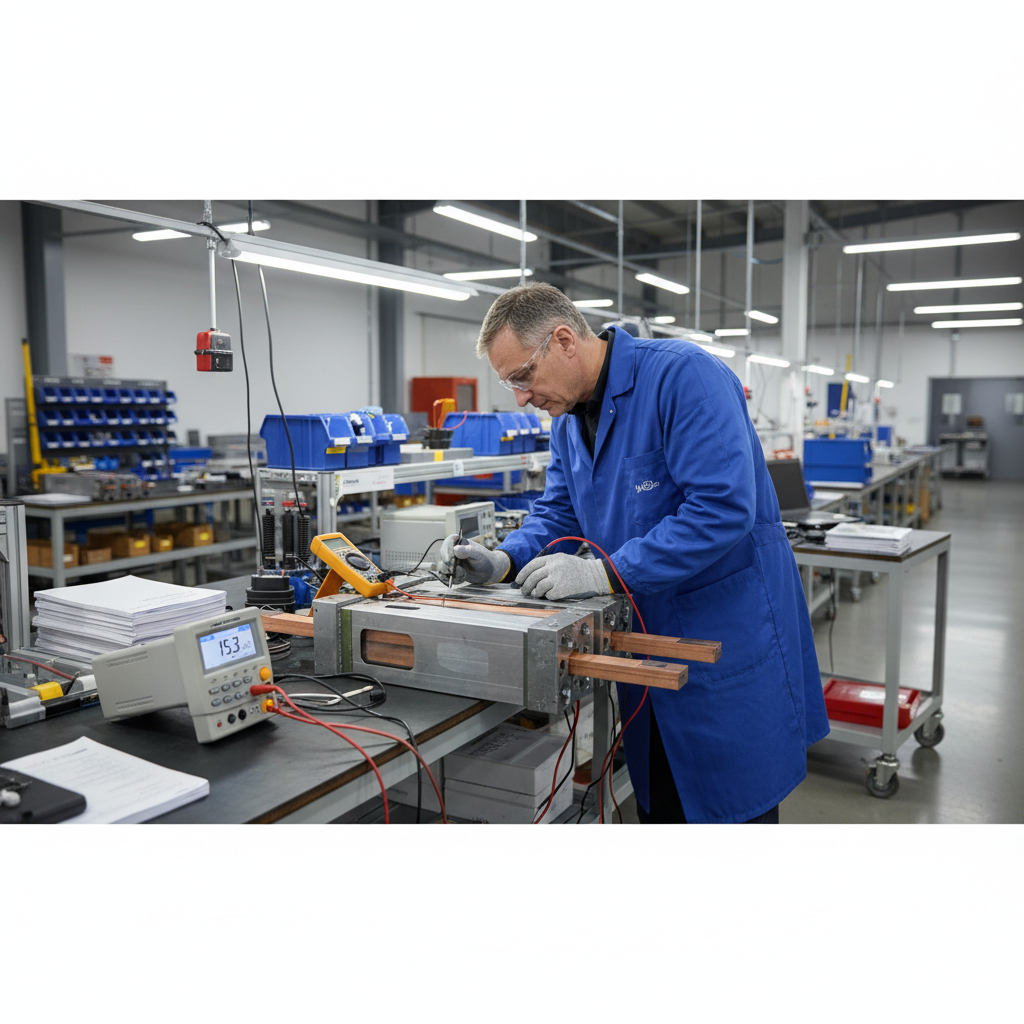
Raw material sourcing transparency starts with conductor grade documentation. ZHERUTONG sources copper and aluminum to documented material specifications, and those specifications are available for review during supplier qualification. In-process quality control covers plating consistency at joint contact surfaces, insulation material lot traceability from incoming inspection through final assembly, and dimensional verification at each production stage. Final test protocols before shipment include dielectric withstand testing, contact resistance measurement, and IP rating verification on completed assemblies.

Each busbar section that leaves our production facility carries batch traceability documentation. If a question arises about a specific unit in the field — whether during commissioning or years later during a maintenance inspection — the production record is retrievable.

Why Does Project Engineering Support Separate Suppliers from Vendors?

A supplier who can only ship product is a vendor; a busbar trunking system supplier who provides layout drawings, load calculation review, installation sequence documentation, and on-site commissioning support is a project partner — and for data center projects, that distinction directly affects installation risk.

Pre-project engineering support from ZHERUTONG includes layout drawing development from customer-provided floor plans, BIM file availability for coordination with structural and mechanical trades, and load calculation review to verify that specified current ratings account for future density growth. During construction, phased delivery scheduling is coordinated against civil construction milestones — the transformer room riser sections ship when the transformer room is ready to receive them, not when it is convenient for the production schedule.

Post-installation, commissioning documentation covers torque verification records, test results, and as-built drawings. Spare parts availability commitments are made in writing at the time of order, not as an afterthought when the facility manager calls two years later needing a replacement tap-off box.

Why Is ZHERUTONG a Credible Busbar Trunking System Supplier for Data Center Projects?

ZHERUTONG's positioning as a data center busbar trunking system supplier is built on three things that most generic suppliers cannot simultaneously offer: IEC 61439-6 certified products with full type test documentation, custom engineering support from layout to commissioning, and production capacity that supports phased multi-site rollouts without quality degradation between batches.

Our product range covers 400A to 5000A, addressing both feeder applications — transformer-to-MDB runs where high current capacity and low voltage drop are the primary criteria — and distribution applications in the white space where compact profile, live tap-off capability, and modular expansion are the priorities. Conductor options include both copper and aluminum, with enclosure types spanning sandwich construction for standard data hall environments and cast resin configurations for areas requiring enhanced protection ratings.

The certification portfolio covers IEC 61439-6 full type test certification traceable to accredited third-party laboratories, with CE marking documentation available for European project requirements. For projects in markets with additional regional certification requirements, our engineering team can advise on documentation requirements during the specification stage rather than during procurement sign-off.

Custom engineering capability at ZHERUTONG handles non-standard tap-off positions specified against actual rack layout drawings, special enclosure lengths required by tight plenum clearances, and project-specific IP rating requirements for areas with elevated humidity or contamination exposure. These are not exceptional requests — they are routine for data center projects, and our production workflow accommodates them without the lead time penalties that less experienced suppliers typically impose for anything outside their standard catalog.

On delivery and logistics, our standard lead time for custom data center configurations runs four to eight weeks from drawing approval, depending on current rating, conductor type, and order volume. For multi-phase campus projects, we coordinate production scheduling against the project program, ensuring that each delivery phase arrives with complete traceability documentation and consistent quality relative to the preceding phase.

What Are the Most Common Mistakes Engineers Make When Sourcing Busbar for Data Centers?

The most costly sourcing mistakes we see from engineers specifying busbar trunking systems for data centers almost always fall into one of three categories: underspecifying current ratings against future load growth, accepting certification documentation without verifying third-party traceability, and selecting suppliers who cannot support phased delivery on multi-building campus projects.

The first mistake — specifying current ratings based on Day 1 load — is understandable given that data center capacity planning involves uncertainty. But a busbar trunking system is not easily upgraded in place. The correct approach is to calculate the projected load at full rack density for the planned facility life, apply a capacity buffer of at least 20–25% above that figure, and specify the busbar rating against the buffered number. The incremental cost difference between a 1600A and a 2000A feeder busbar is small relative to the cost of a mid-life upgrade.

The second mistake — treating "IEC compliant" as equivalent to "IEC full type tested" — has already been addressed in the certification section above, but it bears repeating as a procurement checklist item. Ask specifically for the full type test report, the laboratory accreditation reference, and the test date. If the supplier cannot produce all three, the certification claim is incomplete.

The third mistake — selecting a supplier based on unit price without accounting for project engineering support, change order flexibility, and spare parts lead time — is the one that most often surfaces during construction rather than during procurement. A supplier who prices aggressively but cannot respond to a tap-off position change request within a reasonable engineering turnaround time, or who cannot commit to a phased delivery schedule in writing, will cost more in project delay and coordination overhead than the unit price savings justified.

ZHERUTONG's pre-order engineering consultation is specifically designed to surface these issues before specifications are locked — when changes are inexpensive — rather than after purchase orders are placed.

---

Frequently Asked Questions

Q1: What current ratings does ZHERUTONG offer for data center busbar trunking systems?

ZHERUTONG's data center busbar trunking systems are available from 400A to 5000A, covering both feeder and distribution applications. Copper and aluminum conductor options are available depending on project load requirements, installation geometry, and weight constraints.

Q2: Which certifications should I require from a busbar trunking system supplier for a Tier III data center project?

At minimum, IEC 61439-6 full type test certification from an accredited third-party laboratory is required. Depending on project location and insurance requirements, CE marking or additional regional certifications may also be necessary. ZHERUTONG can provide full documentation for each applicable certification, including the underlying test reports and laboratory accreditation references.

Q3: Can ZHERUTONG support custom tap-off box positions for non-standard rack layouts?

Yes. ZHERUTONG's engineering team works directly from customer layout drawings to specify tap-off positions, box current ratings, and enclosure lengths before production begins. This ensures the delivered system matches the actual installation geometry rather than requiring field modifications.

Q4: How does ZHERUTONG handle phased delivery for multi-stage data center construction projects?

We coordinate production scheduling against project construction milestones, providing phased shipments with consistent batch quality and full traceability documentation for each delivery phase. Phased delivery commitments are documented in writing at the time of order.

Q5: What is the lead time for a custom data center busbar trunking order from ZHERUTONG?

Standard lead time for custom data center configurations is typically four to eight weeks from drawing approval, depending on current rating, conductor type, and order volume. Engaging our engineering team during the specification stage — before the RFQ is issued — allows us to provide the most accurate production timeline and flag any configuration requirements that could affect scheduling.

---

Data center power distribution decisions carry consequences that extend well beyond the electrical room. The right supplier conversation starts at the specification stage, not after purchase orders are issued. If you are working on an active data center project — whether a hyperscale build, a colocation expansion, or an edge deployment — send your project drawings, load schedules, or preliminary specifications to rtdq@rtbusway.com. ZHERUTONG's engineering team will respond with a technical layout review and product recommendation within one business day.

CONTACT US

If you have any queries, get in touch today! Don't hesitate. We try to take the extra step for our customer satisfaction.
First Name *
Company Name *
Email *
Last Name
Country
Message *
Leave a message
First Name *
Company Name *
Email *
Last Name
Country
Message *